|
|
| Sulphur
Hexafluoride (SF6) is a
compound that has a unique
combination of properties,
such as: |

|
Chemical
Inertness |
|
Thermal
Stability |
|
Non-Toxicity |
|
Excellent
Heat Transfer |
|
Non-Flammability |
|
High
Dielectric Strenght |
|
Non-Corrosive |
|
Ability
to Regenerate |
|
that
have seen it applied
in a wide variety of
industries, amongst
others: |
|
|
Magnesium
Casting |
|
Aluminum
Degassing |
|
Leak
Detection |
|
Electrical
Components |
|
Particle
Accelerators |
|
| In
the electrical
industry the
gas is used
primarily in
circuit
breakers,
puffer
breakers
(where SF6 used
in place of
air, oil or
vacuum),
switches and
gas Insulated
transmission
lines |
|
| SF6 does
have a number
of
disadvantages
that are
becoming more
and more
critical to an
environmentally-aware
population. |
|
| Sulphur
Hexaflouride
is considered
to be a fully
flourinated
compound
(FFC). Since
FFC's have
atmospheric
lifetimes of
up
to
50,000 Years,
these potent
greenhouse
gases could
contribute
significantly
and,
essentially,
permanently to
global warming
if emissions
continue to
grow.
If CO2 has
a global
warming
potential of
1,
then SF6has
a global
warming
potential some
25,000 times
higher. |
|
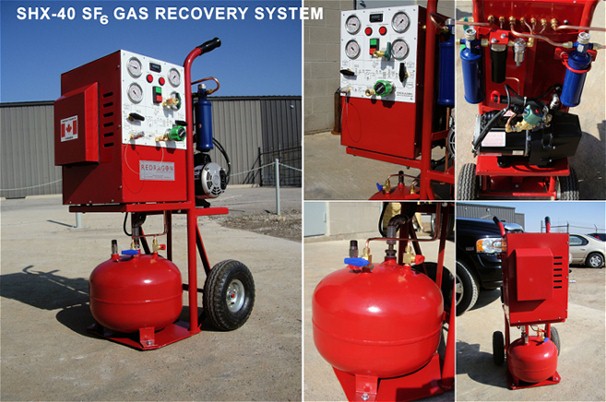
| The
SHF-series
of SF6 recovery
units is
designed to
minimise the
impact of
these means of
the following: |
|
|
|
Greenhouse
gas reduction
- through transfer
of the SF6 from its
current housing to
onboard or external
storage cylinders
the gas does not
need to be vented
into the atmosphere |
|
By-product
removal -
by use of suitably
designed filters and
scrubbers its is
possible to remove
hazardous
contaminants from
the SF6 gas. |
|
Cost
reduction -
by efficiently
recycling the gas
through the SHF
recovery unit it is
possible to reuse
the existing SF6 gas
minimising the
requirement of
purchasing new gas. |
|
| |
|
|